Author Archives: bhyde

Business Model Schema

Some folks at MIT’s Sloan school have cobbled together a scheme for organizing the universe of business models.  I recall reading a lot of this work some years ago and coming away unsatisfied, and so I apparently I never wrote any blog postings about it.  Which is a bit of a shame because it runs close to one of my fantasies, e.g. that it would be fun to write a field guide to local businesses which would mimic the field guides of the natural world.  Then upon observing some business in the wild, say the handful of regulars who beg at the intersection of Mass Ave and Route 16 at the Cambridge Arlington line you could look them up and puzzle out what combination of property rights, regulation, etc. etc. makes that an ongoing proposition.

You can get a taste for the schema from this article: Do Some Business Models Perform Better than Others? A study of the 1000 Largest US Firms.  In an open natural system schemes principally about exceptions and yet the power law nature of those same systems makes for the appearance of large scale regularities.  Those regularities are kind-a-sort-of mimic the organizational frames seen in biology, e.g. kingdom, phylum, class, order … species.  But unlike biology you can create bizarre hybrids.

With that caveat in mind – the primary organizational schema the MIT folks distilled out for business models is has two primary dimensions.

This paper begins by defining a business model as what a  business does and how a business makes money doing those things. Then the paper  defines four basic types of business models (Creators, Distributors, Landlords and  Brokers). Next, by considering the type of asset involved (Financial, Physical, Intangible,  or Human), 16 specialized variations of the four basic business models are defined.

Collect the whole set!  For example WalMart’s business model is, at first glance, about physical assets which they distribute.  Headhunters are brokers of human assets.  Advertising agencies are creators of intangible goods.  Etc. etc.  And of course a complex firm is likely to have portions that fall into many of these slots.

The first dimension picks out what kind of property rights the business is selling and they have this little cross tab for that.

What rights are being sold
How much does the business transform the asset?
limited significant
Ownership of Asset Creator Distributor
Use of Asset Landlord
Matching of buyer and seller Broker

Which raises obvious questions about how firm these categories are. Why isn’t useful to split the Landlords into two kinds, those who add significant value v.s. those who don’t? Or is it actually rare to find matching businesses (i.e. two sided networks) which also play in another category.  Also notice how terms, like creator, become formal and are only loosely connected to their colloquial meaning.  Otherwise, it’s pretty insulting to announce that creators don’t significantly transform the assets when they do their business.  Another example of that problem is how they plug the term Entrepreneur into just one of cells in their four-by-four grid (e.g. creator/financial); which is just silly if you believe that entrepreneurship is the more general activity of creating new institutions.  Actually they quickly ran out of good labels to drop into their four-by-four grid; as you can see:

Financial Physical Intangible Human
Creator Entrepreneur Manufacturer Inventor Human Creator
Distributor Financial Trader Wholesale/Retailer IP Trader Human Distributor
Landlord Financial Landlord Physical Landord Intelectual Landlord Contractor
Broker Financial Broker Physcial Broker IP Broker HR Broker

Density, Hierarchy, and Power

This is a post about why gerrymandering might not be as unethical as it appears; or maybe it’s about the hidden agenda of those who argue against it.

Each time you encounter a highly skewed (power-law) distribution the population spread out on the long tail can be assumed to suffer from a severe coordination problem.  Being numerous, banding together to advocate for their common interests is harder.  Meanwhile the population at the elite end of the distribution have a much an easier time coordinating their actions.  By an example consider overdraft fees – it’s a lot easier for banks to get it together for their prefered regulation than it is for bank customers.

The natural disadvantage of the diffuse and numerous doesn’t prevent the elite from worrying about  the little guy ganging up on them.  This is old news.  In Dicken’s Hard Times we get this dialog.

” All is shut up, Bitzer ?” said Mrs. Sparsit.
“All is shut up, ma’am.”
” And what,” said Mrs. Sparsit, pouring out her tea, ” is the news of the day ? Anything ?”
” Well, ma’am, I can’t say that I have heard anything particular. Our people are a bad lot, ma’am; but that is no news, unfortunately.”
“What are the restless wretches doing now?” asked Mrs. Sparsit.
“Merely going on in the old way, ma’am. Uniting, and leaguing, and engaging to stand by one another.”
“It is much to be regretted,” said Mrs. Sparsit, making her nose more Roman and her eyebrows more Coriolanian in the strength of her severity, ” that the united masters allow of any such classcombinations.”
“Yes, ma’am,” said Bitzer.
” Being united themselves, they ought one and all to set their faces against employing any man who is united with any other man,” said Mrs. Sparsit.
” They have done that, ma’am,” returned Bitzer; “but it rather fell through, ma’am.”

” All is shut up, Bitzer ?” said Mrs. Sparsit.

“All is shut up, ma’am.”

” And what,” said Mrs. Sparsit, pouring out her tea, ” is the news of the day ? Anything ?”

” Well, ma’am, I can’t say that I have heard anything particular. Our people are a bad lot, ma’am; but that is no news, unfortunately.”

“What are the restless wretches doing now?” asked Mrs. Sparsit.

“Merely going on in the old way, ma’am. Uniting, and leaguing, and engaging to stand by one another.”

“It is much to be regretted,” said Mrs. Sparsit, making her nose more Roman and her eyebrows more Coriolanian in the strength of her severity, ” that the united masters allow of any such class combinations.”

“Yes, ma’am,” said Bitzer.

” Being united themselves, they ought one and all to set their faces against employing any man who is united with any other man,” said Mrs. Sparsit.

” They have done that, ma’am,” returned Bitzer; “but it rather fell through, ma’am.”

In spite of that we encourage this uniting in numerous cases.  The California Raisin Marketing Board for example brings together small producers.  We often write regulations to encourage or force the pooling of common interests like that.  From trade association to the interlibrary loan system there are plenty of examples.

Often these schemes involve a certain amount of coercion.  Clearly an urban voter could be a little peeved to discover a Montana vote is twice as potent as his and no doubt there are some California raisin producers who would rather go it alone.

So the menu of schemes for enabling, encouraging, or forcing solidarity on the members of the long tail interest me.  These are the tools for community forming, and one of the most venerable is representative government.  You can’t run any large organization with direct democracy; sooner or latter it’s a good idea to encourage a bit of intermediation.  At some point the town meeting doesn’t work.  So you start electing representatives instead.

Ok, so here’s the point of this post.

Andrew Gelman draws our attention to an political science article (pdf) that throws new light on ethical puzzle of how to draw congressional districts.  The whinging crowd loves to make fun of how bizarrely shaped congressional districts are.  Oh the horror, they cry, look politics has tainted this process.  I’m not sure what they expected, but yeah.

Let’s say your state has two kinds of people, good people and bad people, and they are split evenly 50/50.  Your a good person and lucky you you’ve been given the power to draw your three congressional districts.  So, obviously you draw them so that 80% of the bad people are in one district; thus come election time you’ll get two good congressmen and you can limit the damage the bad voters can do to one congressman.  Such cartographic manipulation is obviously fraught with ethical implications.  Not the least of which is how it leads to increasing polarization, reduced competition and absence of discourse.

You might be able to achieve the above goal indirectly.  For example if all the good voters live in the country and all the bad voters live in the cities then you could lobby for rules that requires congressional districts to have small perimeters, i.e. to be compact.  That would tend to trigger districts bundle up those bad urban voters in compact little districts.  As a fall back position you can’t get of rules adopted that arguing for compact districts you need only argue for such districts on cosmetic grounds.

The article asks: Does a political party who’s voters live in dense regions have some significant structural advantage or disadvantage?  Their answer: yes, a big one.  If representatives are drawn from geographic regions and there is a preference for compactly shaped regions then a party that draws principally from rural areas will have a substantial advantage.  They focus on Florida and use detailed data for the two parties to show that a preference for compact districts gives the Republicans a significant structural advantage given the concentration of Democratic voters in urban districts.

One last thing, communities of common interest aren’t always aligned with geography.  While the raisin growers of California probably have some geographic coherence other groups, e.g. doctors or school teachers, don’t.  For the last century or two communities have been becoming increasingly a-geographic.  It is a fun sort of sci-fi like fantasy to imagine representative district lines that are dawn in virtual rather than physical space.  Then the senator from the Auto Industry wouldn’t have to live in Michigan.

Motivations of Collective Action

Michael Nielsen has a nicely written overview of “The Logic of Collective Action” Mancur Olson’s classic work.

Including this nice try at enumerating how to achieve solidarity around creation and maintenance of the public (or club) good.

  • When it is made compulsory. This is the case in many trade unions, with Government taxes, and so on.
  • When social pressure is brought to bear. This is usually more effective in small groups that are already bound by a common interest. With suitable skills, it can also have an impact in larger groups, but this is usually much harder to achieve.
  • When it is people’s own best interests, and so occurs voluntarily. Olson argues that this mostly occurs in small groups, and that there is a tendency for “exploitation of the great by the small”. More generally, he argues that in a voluntary situation while some collective action may take place, the level is usually distinctly suboptimal.
  • When people are offered some other individual incentive. Olson offers many examples: one of the more amusing was the report that some trade unions spend more than ten percent of their budget on Christmas parties, simply to convince their members that membership is worthwhile.

Doesn’t that kind of list that does more damage than good?  It is thought stopping.  It would be worse if it was shorter; since really there are only two means enumerated there:  bully or bribe.    The creating of common cause is much more nuanced than that.  For example the binding forces that hold together a professional society are so numerous and so individually weak that it’s hard to comprehend the effect if you start sorting them into buckets like that.  All the real vitality in each one of them is destroyed in the process.  You can see that in the suggestion that parties are an amusing way to spend money more the maintenance of solidarity  But yet it is a fun list.  And, it raises the question how much of the typical firms spend for improving staff solidarity is allocated to parties.  You might enjoy his whole essay.

Also rattling around in the I wish people would stop being so reductionist about social motivations part of my brain; is this article at the New York Times about the amount of money some firms are raking in by tapping into people’s impulsive behaviors.  The vendor thinks the 62 million people currently playing FarmVille on Facebook will generate $100 Million in revenue this year.  The few socially embedded examples in the articlereminds me of the term “hard to fake signals” (that’s in Clay Shriky’s book).    One means to a hard to fake signal is to include a third party, who certifies it’s not fake.

The ethical questions raised by the article are striking.

Game creators talk openly about their strategies … get them addicted  …”You put intentional friction in, … want to play at a faster pace can spend money,” Mr. Pincus said.

… competitive reasons to buy, too. Wendy… discovered very quickly … she would be trounced in every … she didn’t have enough fashionable items …

Particularly, when you run this up against people’s issues with impulse control.  Games with a purpose, indeed.

Inequality: Differing Norms on Transaction Boundaries

I’ve not read this paper yet, but I’ve thought about the issues it raises a lot since the very beginning of the housing bubble’s collapse. To summarize the summary this paper is about the different ethical frames around mortgage holders v.s. mortgage lenders.  The lender is expected to act in a purely rational – accountant like – manner, if those actions have the horrible unintended consequences that’s the price of rationality.  We will not think poorly of the lender since his behavior is entirely in conformance with the perverse effect embedded in Adam Smith’s invisible hand.  Meanwhile the mortgage holder is expected to act in a purely honorable manner, and if those actions have horrible consequences on his situation in life we expect him to take it like a man.  If he doesn’t we will feel to lay waste to his honor.  One of the key reasons it’s become popular to label senior executives as psychopaths is how society encourages them nurture a disconnect between what is maximally beneficial in an accounting sense and the effects of their actions on the lives of individuals.

The paper by Brent T. White is  “Underwater and Not Walking Away: Shame, Fear and the Social Management of the Housing Crisis” (pdf) and it’s abstract:

Despite reports that homeowners are increasingly “walking away” from their mortgages, most homeowners continue to make their payments even when they are significantly underwater.  This article suggests that most homeowners choose not to strategically default as a result of two emotional forces: 1) the desire to avoid the shame and guilt of foreclosure; and 2) exaggerated anxiety over foreclosure’s perceived consequences. Moreover, these emotional constraints are actively cultivated by the government and other social control agents in order to encourage homeowners to follow social and moral norms related to the honoring of financial obligations – and to ignore market and legal norms under which strategic default might be both viable and the wisest financial decision. Norms governing homeowner behavior stand in sharp contrast to norms governing lenders, who seek to maximize profits or minimize losses irrespective of concerns of morality or social responsibility. This norm asymmetry leads to distributional inequalities in which individual homeowners shoulder a disproportionate burden from the housing collapse.

It isn’t surprising that these two groups would have very different perceptions of what the rules and ethics of the situation are.  Maybe what is surprising is that people tend to deny that; or having admitted it they then pick a very firm opinion about what the right position is about this.  I.e. bank smart, borrower stupid, consequence is borrower’s fault; or bank ethical, borrower ethical, consequences be damn’d.  You could setup three spinners and use them to assign a position to your high school debating club.

I love those sociology terms ‘social control agents,’ and ‘norms.’  I observe a lot of management cultism and it’s less black and white fellow travelers, e.g. MBA training, is focused on how engineer and manipulate such levers.  Most practical men are indeed in thrall to the ideas of some long dead sociologist and current events are proving him nearly correct.

Bonus video:

The Perverse and Invisible Hand

I have recently started reading Albert Hirschman’s 1991 book “The Rhetoric of Reaction: Perversity, Futility, Jeopardy.” I’m only 20 pages into it so no telling where it’s going. But so far, it has totally blown me away. The book is an outline of three styles of rhetoric that are commonly used by reactionaries, i.e. those who would react against progress. These are generic arguments good in most any situation. Introducing free speech, extending the franchise, ramping up public education, rearranging the kitchen? You name it these rhetorical devices stand ready and willing.

He labels the first of these “perversity.” Here in while reactionary pretends supports the goal he then goes on to explain that efforts toward that end are certain to backfire. Efforts to improve health care? Such efforts will decrease health care! Universal schooling? Such efforts will lead to wide spread idiocy. Do-gooders make things worse. The audacity of this argument is breath taking. But look at the record! How that French Revolution turn out?

Hirschman points out that observers of the French Revolution quickly deployed this argument. Even before the it all went to hell in a hand basket. Edmund Burke in particular used this perverse argument, and later when it things got ugly he got a lot of credit for being so insightful. So did Burke invent this technique? Hirschman argues that no, Burke was mimicking newly popular argument with a similar structure that had recently arisen in the circles he ran in. I.e. the hypothesis of Adam Smith. Aka, the Invisible Hand. This takes my breath away!

The invisible hand is a perverse argument. But in this case bad actions (individual greed, personal vices, and self interest) have the unintended consequence of creating a vibrant national economy. It’s as if God in his infinite wisdom had sus’d out how to turn his flock of sinners into something constructive. Smith might have given credit to divine providence but choose to give the credit to more amorphous but still spirtual invisible hand. Many of Smith’s readers saw right thru that. Particularly all those commercial actors looking to get the church off their case.

I can’t seem to stop chewing on this. It goes in all kinds of directions.

There are numerous systems where actions sum up to something surprising. I can’t believe that I hadn’t noticed how Evolution and the Invisible Hand are both theories of a kind. In evolution the bad (dyslexic genes, mutations, death, mindless long time) that shapes inconceivably marvelous species. There is, it appears an entire class of theories where acts of ethical kind sum to results of the opposite kind. God works in mysterious ways.

I am enjoying this book.

Handwashing

Science Friday interviewed a researcher who looked into how various bits of signage might increase the incidence of hand washing.  They were able to get a large sample by setting up shop in a rest stop.  A nice example of A/B testing.

Here is the key table from their paper.

The table has one section for men and another for women. What they put on the sign is shown in the first column and what lever they thought they were pulling is shown in the second column. In some cases I have my doubts that the statement was pulling the lever they think it was. The last column shows how effective the sign was compared to doing nothing.

Soap Ratio Message Domain Relative Increase From Control Condition % P
Men
0.312 Blank Blank control (Ref)
0.321 Blank Blank control (Ref)
0.325 Toilet germs soap hands clean Knowledge activation 2.7 .488
0.328 Sticky hands? Get that soapy smoothness Comfort 3.6 .35
0.331 Water doesn’t kill germs, soap does Knowledge of risk 4.4 .267
0.337 Don’t be a dope, wash with soap Status/Identity 6.5 .09
0.338 Wsah yuor hnads wiht saop Knowledge activation 6.7 .065
0.339 Shake hands confidently—Wash with soap Norms/Affiliation 6.9 .09
0.339 Wash your hands with soap Positive control 7.0 .067
0.341 See sink? Use soap Cue 7.5 .073
0.341 Washing hands with soap avoids 47% of disease Knowledge of risk 7.6 .033
0.342 Toilet—sink—think- soap Cue 7.9 .029
0.346 Soap it off or eat it later Disgust 9.3 .012
0.347 Wash your hands with soap Positive control 9.4 .017
0.349 Don’t be a dirty soap dodger Status/Identity 10.3 .013
0.350 Don’t take the loo with you—wash with soap Disgust 10.3 .005
0.354 Soap adds a fresh touch Comfort 11.7 .004
0.355 Is the person next to you washing with soap? Norms/Affiliation 12.1 .001
Women
0.620 Soap adds a fresh touch Comfort –4.8 .143
0.648 Blank Blank control (Ref)
0.654 Blank Blank control (Ref)
0.662 Toilet—sink—think- soap Cue 1.7 .562
0.663 Soap it off or eat it later Disgust 1.9 .565
0.670 Shake hands confidently—wash with soap! Norms/Affiliation 2.9 .375
0.680 Sticky hands? Get that soapy smoothness! Comfort 4.4 .173
0.683 Don’t be a dope, wash with soap Status/Identity 4.9 .155
0.691 See sink? Use soap Cue 6.2 .078
0.694 Washing hands with soap avoids 47% of disease Knowledg of risk 6.5 .051
0.702 Don’t be a dirty soap dodger Status/Identity 7.7 .014
0.705 Don’t take the loo with you—wash with soap Disgust 8.3 .013
0.707 Wash your hands with soap Positive control 8.6 .015
0.709 Wsah yuor hnads wiht saop Knowledge activation 8.9 .007
0.709 Wash your hands with soap Positive control 8.9 .005
0.714 Toilet germs soap hands clean Knowledge activation 9.7 .004
0.722 Is the person next to you washing with soap? Norms/Affiliation 10.9 .001
0.723 Water doesn’t kill germs, soap does Knowledge of risk 11.1 .001

I was bemused that the study authors thought it notable that what works on one group isn’t what works on another group (i.e. men v.s. women). I very much doubt the authors are unaware of the vast literature on the practices of discriminatory marketing. Presumably in a country like England which has deployed Orwellian social monitoring they should be able to customize the message based individual profiling. Web advertisers certainly try.

Experimental Pretesting of Hand-Washing Interventions
in a Natural Setting
Gaby Judah, BA, Robert Aunger, PhD, MSc, Wolf-Peter Schmidt MD, MSc, Susan Michie, DPhil, CPsychol, Stewart Granger, PhD, and
Val Curtis, PhD, MSc

Things I’m liking…

stationI’m liking these thin skinned vaults.  People used to do amazing things with bricks and tiles, and  folks at MIT are working to bring it back.  In the US we have a lot of amazing tile/masonry buildings via the work of Guastavino.  And, have look at these mostly abandoned  buildings in Cuba, also  via satellite.  One contributor to these techniques falling out of favor was rising labor costs, but also a lack of tools for doing the structural analysis on them and, in turn, a lack of building codes.  There are thrust lines that flow thru these arches, and they had better stay inside the masonry, otherwise it’s going to crack.  A single layer of tiles might be only an inch think; so best to know what your doing.  The folks at MIT think they have that problem solvedThese building suggest their right.  Try it yourself.

From Aspen Aerogel, click to enlarge.

From Aspen Aerogel, click to enlarge.

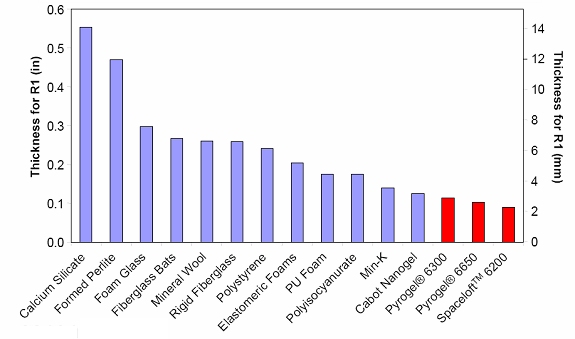
I’m also liking Aerogel insulation.  When I was a kid it was well know that the down of goslings, preferably from a Scandinavian goose, provided the worlds best insulator.  Man had yet to create a better tangle for capturing air and frustrating heat.  Nature is still  doing well in that race and  I still own a down winter coat.  But, it was lie.  In the 1930s chemists invent this stuff Aerogel.  It’s a solid consisting of nothing but fibers of silica.  It’s rigid, almost transparent, quite brittle, and extremely expensive.  But it’s practically opaque to heat, so NASA wanted to use it and they funded a mess-o-research.  These days you can buy small insulating panels of it so when you ship whatever in dry ice you only need to put but a tiny bit of ice in the box and it will stay cold for days.  You can get insulating batts of this stuff in various forms for around 3-4$ a square foot from Aspen Aerogel.  But  those aren’t as perfect an insulator as the solid blocks.  You can also buy it in granular form for poring into spaces (Cabot).  Not  as fine an insulator as the insulating batts this stuff can be nearly transparent so it gets used in skylights, exterior wall panels, and inflated or tension roofing.  You can also buy a slice of it wrapped up into liners for your shoes, a pad for sitting on the cold bench at the game, or for keeping your hot laptop from scalding your legs.  My favorite application is in these personal air heat exchangers.

There is a nice overview of various kinds of insulation here, which shows that the aerogel products have some near competitors; not mentioned though are these delightful batts of wool insulation, I like ’em.

I like this video demonstrating the hyperbolic discounting problem.  But the popular articles about this experiment are horrible.  They don’t actually explain how universal the problem is nor do they bother to give any hints on how to deal.  In this video the only means left to these kids is manipulation of attention, and even that was incredibly limited.  I assure you, this experiment would work just as well on adults.

Oh, The Temptation from Steve V on Vimeo.

And, I’m liking my name sake, I need to make a visit.

Damn Ice Dams

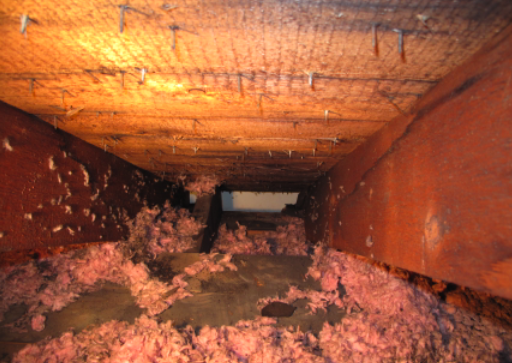
This is picture of a small portion of my late 19th century house.  This is a bit of the unfinished portion of my attic.  The shot is taken between two of the rafters.

attic

The half inch thick lumber that forms the roof is shown, along with a few roofing nails that have come thru from the other side.  Below you can see the floor of the attic and a small drift of insullation left behind from when it was blown into the side walls.  Somebody, probably the contractor, did the right thing and raked it away from the eves.  At the very bottom you can see into the box that forms the eves.  We had rebuilt some years ago, which is why the wood in there has that coat of white primer on it.

Each year this portion of the room forms a vicious ice dam.  It rains onto the entrance porch and leaves a glaze of ice.  It was the there one of the days the agent showed us the house decades ago.

Ice dams form because the snow on the roof melts. That happens because the roof is warm, it shouldn’t be warm.  The water then flows down till it gets to a cold spot, often the eves, where it freezes.  Maybe you get a dam maybe you just get icicles.  We mostly just get icicles.  That’s good, since if you get damns the water on the warm part sometimes forms pools that work their way thru the roof and damage the interior.  That’s bad because it implies that my eves are being warmed, presumably by warm air traveling up the wall cavities.

Click to Enlarge

Click to Enlarge

I tried to address this problem when we had the roof done and the eves repaired.  The textbooks prescribe that you need to get cold air to flow up the interior surface of the roof.  Entering thru vents in the eves, and exiting thru a vent along the top of the roof.  When we had the roof done a decade ago that’s what we bought.  The eve vents are little one inch holes filled with little aluminum widgets that let the air in and keep the bugs out.

I have another picture like the one above with the lights turned off.  The problem is, it’s entirely black.  No light, and so I presume, no air is getting in from outside.  There are five pairs of rafters in the portion I was inspecting today.  In only one of them is light leaking in.  I feel a slight cold draft in that one, just as I should.

My vacuum cleaner’s hose isn’t long enough to reach into these cavities.  What to do, what to do?