DTR

I think I’ve found the most evil journal in the university library. The Journal of Consumer Research is marketing’s DARPA, the place where new weapons in are developed for sales and marketing. There are plenty of self help airplane books for salesmen, like Sales Closing for Dummies, or Sig Ziglar’s Secrets of Closing the Sale. What you get over in the Journal of Consumer Research is guys in white coats throwing around psychology jargon like mad scientists. For example: “Disruption should impede closure and motivate consumers high in NFCC to seek clarifying information that facilitates the ablity to reach closure quickly.”

The article that drew me in was on a little trick of the trade known as DTR, or Disrupt and Reframe. This gimmick works by first confusing the buyer and then re framing it to be less confusing. For example:

“The price of these note cards is 300 pennies.” This disruption was followed by the reframing: “That’s $3. It’s a bargain.” .. compliance rates ranged from 65% to 90% … compared to only 25% to 50% …”

While I love the use of the word “compliance” the take away is that 2-3 times more junk get’s sold if you bewilder your customers.

That mnemonic above NFCC refers to a trait known as need for cognitive closure. People with very high or very low NFCC are a bit rash. Folks with very high NFCC will rush to pin an explanation to a mystery; and then cling tightly to it going forward. Folks with very low NFCC leave everything open to further assessment.

It is but one of a slew of traits that psychologists have tests to measure, IQ probably being the most famous. The traits give rise to metrics, and the metrics can then be used to forecast patterns of behavior. It’s usually less accurate than predicting the weather with a barometer, but certainly more accurate than throwing dice. Puzzling out new metrics like this is one of the ways the field of psychology moves forward. It’s good if the metrics are independent much the way wind and temperature are better than wind and wind-chill. So it is standard practice to see if metric A is correlated with metric B. For example NFCC is not highly correlated with intelligence.

The psychologist, not a marketing guy, that invented NFCC has two other metrics that I found thought provoking. He points out that when solving a problem you can assess your options or you can get down to work. Presumably for a high stakes problem you’d be well advised do lots of both, but he suspects that people don’t. So he sought out a metric that would score people’s tendency to assess; and a second metric that would score their tendency to act.

One of the reasons that DTR works is that it exhausts the buyer’s willingness to assess the purchases, and that helps to move him into the acting phase.

To me the interesting thing about all this is that is suggests that many other persuasion techniques might be better framed into these terms. For example the usual explanation for why vendors like prices like $1.97 is that innumerate buyers think ‘Ah, a dollar” rather than “Ah, two dollars,” discussed here (pdf). I, now, think that’s wrong. The functional purpose of that pricing technique is to inflict a DTR attack on the buyer.

Visa risk

Income inequality effects firms and individuals. Rising inequality moves hand and hand with increasing skew in the distribution of firm size. For firms this goes by various cliched names, consolidation for example. When it becomes extreme then we talk of anti-trust. In this framing talk of what’s good for small business is analogous to talk about what’s good for the poor and in those terms the ideas of consumer protection are mimic’d by regulations, like anti-trust, that temper the power of the large firms over the small ones.

The payment’s industry is a good exemplar for all these dynamics. Follow the money, and all that. There is a lot of high stakes antitrust litigation (2.1 Billion example) in the payments industry. Personally I think these cases should get more press coverage.  Visa has filed to go public (10 Billion).  These exchange networks are big money; e.g. UPS, or AT&T wireless (10.6 Billion) As an aside I find this is interesting from an industrial standards point of view. It makes me wonder if the folks that run the Universal Product Code hub could go public too?

The risk section in Visa’s S1 makes for interesting reading. It’s a guided tour of the business model. I love S1 since they are a rare attempt to speak clearly about the business. A good example: “Our management team is new and does not have a history of working together.” Where else would you get to see that? Or that they have a complex partnership with Visa Europe full of technical stress; and options for significant financial events they don’t control.
Regarding the introduction above it says that both banking and retailing are becoming more consolidated. It’s nice to have diffuse and weak neighbors in the supply chain; it’s a pain to have powerful neighbors since they tend to be difficult to negotiate with.

Consumer protection, i.e. government regulation targeted to protect consumers, hardly shows up in their list of concerns. Government regulation does. Privacy regulation is the closest the come to a consumer protection worry; and that appears to be less of a worry than dealing with the thicket of regulations thrown up after 9/11.

Its telling that they frame their concerns about credit card fraud entirely in terms of it’s effect upon the brand.
I love to anthropomorphize and these dozen pages are a great window into what keeps a payment network up at night.

de novo branching

banks.pngIf I tally up all the retail businesses with in a mile of my house one category stands out. Retail banking offices are an invasive weed on the local landscape; a persistent weed. Presumably rational business men over the last year have built quite a few new branch offices in my town. Demand for banking services certainly hasn’t increased. Our economy and demographics is very stable and looks likely to stay that way. The reasons for this blight must lie elsewhere.
But where? Here’s my guess. There is tremendous pressure on firms to grow, and to take risks to enable that growth. The rules of the game are, oddly, structured so that on average these bets don’t work out very well. For the investor this is a statistical curiosity, a lot of risky bets plus some diversification creates higher return. For the firm’s employees and neighbors it’s an offputting realization.

In the days when banking was closely regulated business banks expanded by building new branches, and enticing customers to open accounts. The classic enticement was a toaster.

When society discarded the regulations against bank consolidation the route to growth was acquisition. Growing companies by acquisition is risky; it creates a slew of coordination problems to be solved. If your lucky you get some economies of scale. Modern IT has made banking pretty efficient. Bank acquisition was one way that IT efficiency spread through the system. So I’ll buy that there was some cost and efficiency drivers for the rollup of banking over the last few years.

I gather that’s pretty much played it’s self out. The banks that were available to be acquired have become a scarce commodity. No doubt this has created demand for more. Some of the new branches are tiny banks building additional branches, and I think they are dressing up for acquisition.
Banks are now returning to their traditional growth strategy; i.e. opening new branches. I doubt there are powerful technological drivers for this; but there are regulatory ones. Citibank, which recently announced plans to build numerous new offices around the Boston area, can do that because of regulatory change and when you combine it with the scarcity of banks available for acquisition it’s their cheapest route to growth.

Apparently all the largest banks are playing this game, which goes by the name de novo branching (note that link is 2003). What’s a bit disturbing is the realization that mot of these giants are not yet on the ground in my town; so it seems not unlikely we are going to get a lot more banks real soon now. Their investors demand that they grow; they don’t care that my town is way over banked;

Energy Storage

This chart show various possible solutions to a problem.  If you can create energy in one location how do you store it?  For example you might charge up a battery or spin up a fly wheel.

tes.png
The upper right corner is suggestive of how dense and hot fuels are, i.e. oil and it’s friends.  But it’s hard to make an entire energy cycle out of them.

This post doesn’t really have point.  Just something I’ve been thinking about.  Triggered, to a degree, by discovering that natural gas is cheaper than pellets for your pellet stove and the associated  fact that people heat with corn in parts of the midwest.

I lifted that out of this presentation (pdf).

Black swan over the horizon

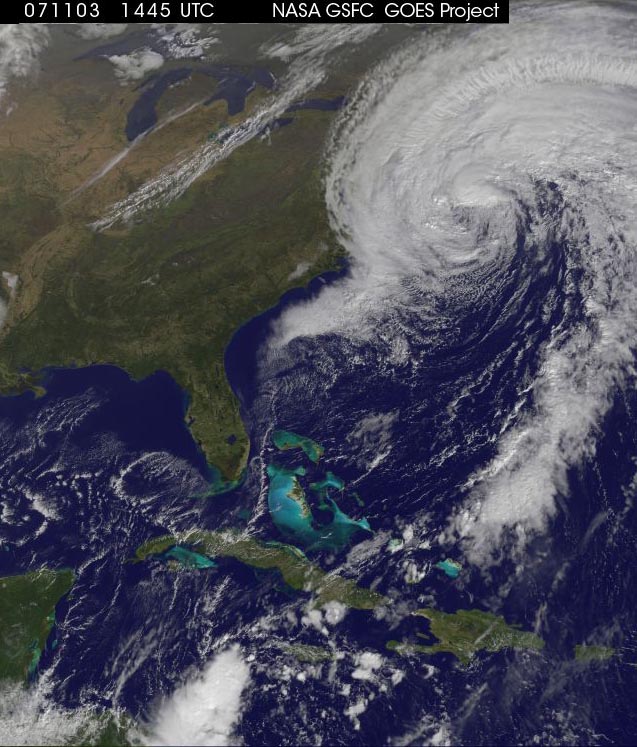
noel_nov3.jpg

Nor-easters are called that since the wind comes out of the north east.  Noel is beautiful example.    This storm dropped two feet of rain on some islands in the Caribbean.  Today at the vegetable market people were peeved.  They order on Wednesday morning; at which point we were forecast to have reasonably nice weather today.  The forecast had it a bit more to the right.  Slightly stronger, slightly to the left, it would have been worse.  .

Secret of Productivity

housearrest.jpgEvery since reading Ainslie‘s “Breakdown of Will” I’ve be thinking and reading a lot about what might be called self management. I’m currenly reading “Ethics, Law and the Exercise of Self-Command.” There is a delightful quote in this essay:

Social controls play a role; the Times Literary Supplement for January 22, 1982, contained a splendid example, a review article by George Steiner on the life and work of the Hungarian radical Georg Lukacs. “When I first called on him, in the winter of 1957-8, in a house still pockmarked with shellbursts and grenade spliters, I stood speechless before the armada of his printed works, as it crowded the bookshelves. Lukacs seized on my puerile wonder and blazed out of his chair in a motion at once vulnerable and amused: ‘You want to know how one gets work done? It’s easy. House arrest, Steiner, house arrest!'”

That example is splendid, but exceptional and extreme. The student of this stuff should, I think, pay more attention to more pedestrian social controls; e.g. voluntary membership in groups who’s habits we admire and aspire to. The rough edges of voluntary are far more interesting than the strong arm example of house arrest.

housearrest2.jpgThe essay appears in “Choice and Consequence” by Schelling. The topic of this essay is the ethical puzzle of what society can and can not do to help individuals keep their promises to themselves. This is an extended discussion of the curious fact that you can’t make contracts with your self and then go to the court to have them enforced. Schelling’s other essay in this arena “The Intimate Contest for Self-Command” also appears in this book.

Schelling also reached the conclusion I got from reading Ainslie; that the individual is a group of interests who’s governance has so much in common with the governance of other groups that it becomes useful to treat the individual as just like any other hard to manage group.

Meanwhile there is little concensus on what the secret of productivity is.

miscreant market

Schneier points out this paper (pdf) reporting on patterns the researches found by listening on on the IRC channels where evil-hackers buy and sell credit cards numbers, bot-net rentals, and the other commodities of the spamming and identity theft industry.  The authors refer to the actors in this market as miscreants.  I guess I can’t really call this a miscreant market; since we usually name markets not after their participants but after the commodity exhanged; as in meat market.

This market is interesting as a case study.  Since it’s commodity is illegal it has a harder time condensing out hubs for the exchange to rendezvous around.  They use IRC channels because that medium is a bit more peer to peer than other choices.  I presume that this community is the one that will finally build a real anonymous peer to peer IRC network.  Well pseudo-anonymous because like any market they need to have a reputation bank of some kind to keep the books of the repeating prisoner’s dilemma.

Had to write this.  I couldn’t reisist getting the word prisoner, miscreant, and evil-hacker all together in a posting about market structure; mentioning peer-to-peer is desert.

Hourglass on it’s side

strawberrypick.jpgThis article that Brad DeLong posted to his delicious bookmarks is perfectly aligned with my interests. First off it has a wonderful new metaphor for a two sided network effect:

Think of it as an hourglass on its side, says Brian Cook, a research consultant who studies food issues for Toronto Public Health. “You’ve got thousands of farmers on one side, and consumers on the other. In the middle, there’s a bottleneck.”

That’s nice because fleshes out the usual idea of the two sided network as having a bottle neck and emphasizes the grains, the flow, the rate; i.e. the timing. The article is about strawberries; the grains of sand are not single strawberries but truck loads of them. To get the sand to flow smoothly you need to standardize; as the standards become more exacting the growers who fail to fit the standards are displaced from the system.

… McCarthy, sold to a developer last year after an especially gruesome season. Two weeks before the strawberries on his patch were due to glow red, the nearby chain he counted on to accept hundreds of quarts daily canceled. It no longer accepted back-door deliveries. …

Or this example which is about details, timing, capital equipment, etc.

into the lot behind Food Basics in Georgetown. Already in the lot are two 18-wheel tractor-trailers, one finishing a delivery while the other waits its turn.

They are refrigerated, …

“Oh Jesus, oh my God – we’ve got to wait,” he says, gripping the wheel tightly. “We’ve got perishable stuff here. If it’s left in the vehicle in the sun, it’s going to be roasted.”

strawberrypallets.jpgThat example is the counter point to the pattern I usual talk; i.e. routing around the a monopoly bottleneck. In this case as the standardized distribution hub condenses out it displaces the long tail strawberry producers who lack refrigerated trucks or who production doesn’t fit in the required unit size, e.g. an 18-wheeler.

I wrote sometime ago about how the modern strawberry has evolved. Where it once fit the mouth of the sparrow it now fits into the mouth of the buyer. To survive as a modern producer you have to fit the mouth and the throat of your adjacent hour glass bottlenecks.

It is rare to read a well crafted article about displacement. Most such articles fail to grasp nub of what is causing it. Often the tend in these articles is to over identify with the victims of the displacement. Though there is an another kind of article that waxes heroic narratives about the entrepeur creating the hub of the wonders of the market. Between these two over emotional journalistic approaches it is very hard to think clearly about all the externalities involved in the process.

The granularity of agriculture is right up there with Moore’s law one of the forces reshaping the world economy. And it’s been doing it for much longer (see Diamond’s the Worse Mistake, pdf). Drop into any point in history and you’ll find stories of farmers being displaced by technology. For example writing about the rise of urbanism in the late 19th century as triggered by railroads Douglas Rae quotes an expert suggesting that Connecticut farmers are going to need to diversify.

“… his farm decreasing in value, his capital shrinking, his crops no longer paying fairly because of Western Competition, … expert … suggesting “raising … squabs, trout, carp, honey, mushrooms … “

That’s 1890, but it sounds remarkable like Michael Dukakis suggesting that Iowa farmers raise endive. The tragedy here is that the advice is basically bogus. If the distribution channel is changing in ways that dry up opportunities in the long tail then your an idiot if you try to survive by diversifying. The answer is not to become less standard, more eccentric. Rather you needs to be on find a way to evolve; to fit through the throat of the new hour glass. Or maybe you can route around; find somebody willing to open their backdoor.

Ferberization of Knowledge

Ok! Did Arron Swartz really say in his talk about Open Library what David Weinberger reports:

The first thing librarian argued about when they saw OL was what subject classification system to use. “We don’t have to choose on the Internet. We can store all the category systems and let people choose which ones they want.” Likewise with all the different identifiers, e.b., ISBN, OCLC numbers, OL identifiers. (“We have to make our own identifier system because we’re going to have more books.”)

Ferberization means connecting physical books to all the different abstractions, e.g., print runs, editions, translations, etc. The library world has focused primarily on the physical books on the shelves. “We’re going to have to come up with new ways of expressing the relationships,” including allowing people to create new relationships, e.g., this book is based on that one, this book refutes that one, this one replaces that one.

This is just outrageously funny! It’s perfect! I’m gobbsmacked. Oh, I hope that’s what he said!

For those who don’t know, Ferberization is a process for teaching a baby the skill of putting it’s self to sleep.

Don’t you just hate the way those damn books wake up at all hours demanding to be settled down again into their snug little categories?